

Good Friday: "An Anointed One Shall Be Cut Off"
Daniel 9 - 70 Weeks Prophecy Analysis and The Signs of Immanuel

From last week,
Passion Week, The Twins, and The Two Witnesses

When Apostle John writes about the Two Witnesses, he refers to the two lampstands and describes their suffering and resurrection, much like Jesus Christ. And we cannot ignore the ancient names of Pollux and Castor themselves. Castor, denoting the “Ruling Judge.” Pollux, denoting “Who labors and suffers.” One last Two Witnesses correlation: Apostle John writes, “these are the two olive trees” (Revelation 11:4). There is something that occurs in nature, which is that old olive trees sometimes rot from the inside, causing them to split into two trees, like twins.
This week we will continue to research the Prophecy of Daniel.
Introduction
This research article will further analyze Daniel’s 70-week prophecy as it pertains to the meaning of the “Anointed One”.
Who is the “Anointed One”?
What does the “Anointed One cut off” mean?
What signs were in the Heavens?
If there are signs in Heaven that corroborate the dates derived from Daniel’s 70-week prophecy, would this provide more evidence of the “fingerprints of God’s divine plan”?
Reviewing Daniel and the 70 Weeks Prophecy
In approximately 605 BC, Daniel was taken captive to Babylon. The Babylonians destroyed Jerusalem between 587 and 586 BC.
Daniel is given a gift of prophecy. He interpreted dreams. He becomes an advisor to Nebuchadnezzar II of Babylon, Belshazzar of Babylon, Darius the Mede, and Cyrus the Great of Persia.
In Chapter 9, Daniel has a vision while under the first year of Darius, son of Xerxes, who had been made ruler over Chaldea. The year is most likely 539 BC or 538 BC. In the Annals of the World, by Archbishop James Ussher, the later date of 538 BC is cited.
Daniel begins to describe a future vision, nearly a century later, where Jerusalem is rebuilt. Scholars believe this future date is March 5th, 444 BC, when Nehemiah returns to rebuild the walls of Jerusalem. Note: Later this date can be analyzed in Stellarium.
Let’s review Daniel 9:23-27.
Therefore, consider the word and understand the vision.
The Seventy Weeks
24 “Seventy weeks are decreed about your people and your holy city, to finish the transgression, to put an end to sin, and to atone for iniquity, to bring in everlasting righteousness, to seal both vision and prophet, and to anoint a most holy place.
Daniel describes a vision with
an “end to sin”,
an “atonement for iniquity”, and
“everlasting righteousness”.
Prophets like Samuel anointed David with oil, who then became the King of Israel, but who can bring an “end to sin” and bring in “everlasting righteousness”? Jesus would come from the Line of David, the Line of Judah, and the Lion of Judah.
Verse 24 ends with “to anoint a most holy place”, and there is a footnote to clarify that it can also be interpreted as “most holy one, or thing”. So, the “everlasting righteousness, to seal both vision and prophet” could involve the anointing of a place and/or people once all 70 weeks are complete. Let’s look again at the 70 weeks.
In a previous article, the following calculations were introduced. Scholars believe Daniel used a week of 7 days to represent 7 years.
70 weeks = 70 x 7 days = 490 days; therefore 490 years.
Per Daniel, it will take 490 years in total for the prophecy to be fulfilled. There is debate over whether this is a consecutive 490 years. Some have broken up the total years to be 483 years + a final 7 years in the end times. Let’s first look at the initial 483 years. Then, based upon the historical timeline and Events on Earth, we can look at the final 7 years in a future research article.
25 Know therefore and understand that from the going out of the word to restore and build Jerusalem to the coming of an anointed one, a prince, there shall be seven weeks. And for sixty-two weeks it shall be built again with squares and moat, but in a troubled time.
The “word to restore and build Jerusalem” is a time recorded in history. It can be traced back to Nehemiah, the cupbearer of the Persian King Artaxerxes, on March 5th, 444 BC.
March 5th, 444 BC Sign of Spiritual Warfare
Nehemiah was a leader who went back to Jerusalem to restore and rebuild the walls and gates of Jerusalem. He faced the following challenges, including ridicule (Nehemiah 2:9, 4:1-3), wrath (4:1, 6-9), discouragement (4:10), fear (4:11-23), internal strife (5:1-5), laziness (4:10), Satanic trickery (6:1-8), and false prophets (6:10-14).1 Satan did not want Nehemiah to succeed.
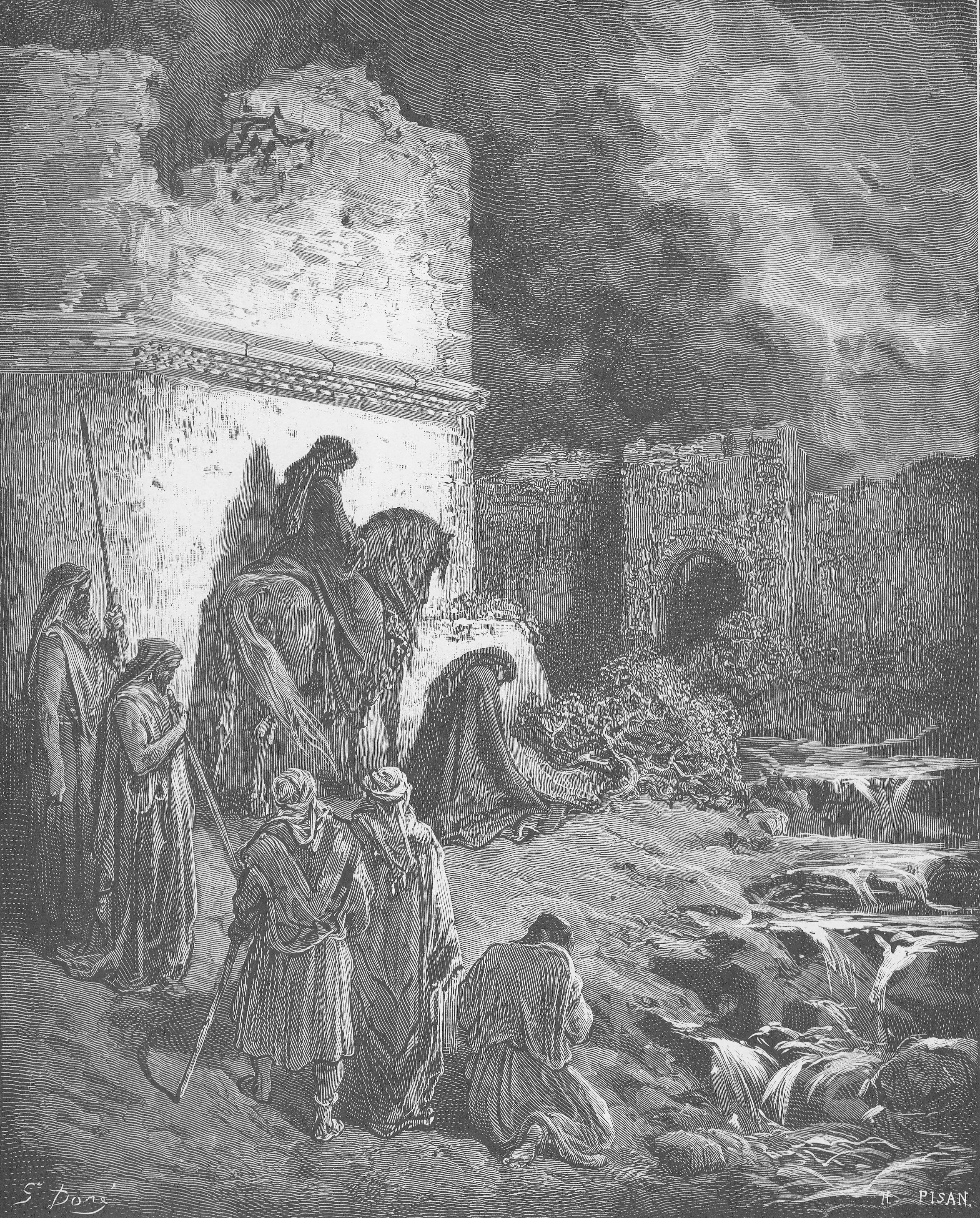
(source: Wikimedia Commons, public domain, Nehemiah Views the Ruins of Jerusalem's Walls (Neh. 2:1-20))2
When one looks up March 5th, 444 BC, a sign appears in Taurus the Bull. Saturn, Mars, and Jupiter are aligned in Taurus. When these three planets align, it symbolizes Spiritual Warfare. Saturn correlates to Satan, Mars to war, and Jupiter to “His Star”, the King Planet that the wise men saw at the birth of Jesus Christ on September 11th, 3 BC (See The Signs of Immanuel). A crescent new moon is positioned near Jupiter. This is the first day of Nisan 3317, the beginning of the Jewish Calendar according to the Torah. Saturn is near the brightest star in Taurus, Aldebarran, which denotes governor, chief, or leader.3 On this day, there is a decree to rebuild the walls of Jerusalem (Nehemiah 2). Nehemiah became a leader for the people to rebuild Jerusalem and returned to be the Governor of Judah.
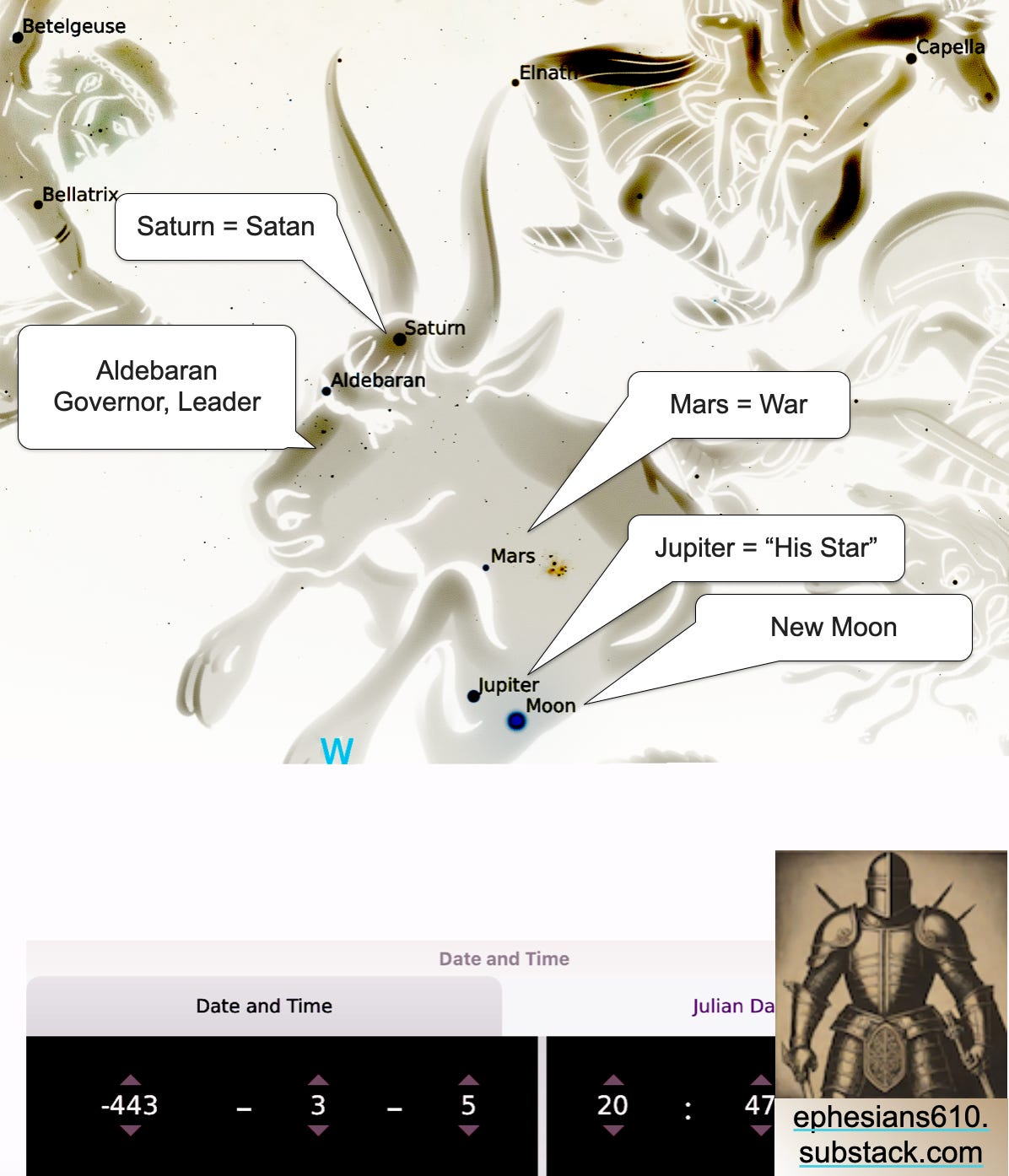
Therefore, from the rebuilding of Jerusalem (see the Book of Nehemiah), there shall be seven weeks and another sixty-two weeks of construction.
7 weeks + 62 weeks = 69 weeks
69 weeks x 7 days/week = 483 days
483 days = 483 years in this prophecy.
26 And after the sixty-two weeks, an anointed one shall be cut off and shall have nothing.
After the period of 483 years in the prophecy, the anointed one is cut off and shall have nothing. What does this mean?
Hypothesis: One can hypothesize that the Anointed One is Jesus Christ, and being cut off means the Crucifixion of Jesus Christ on Good Friday. However, what do other scholars say? What does the original language say?
Who is the Anointed One?
In the New Bible commentary: 21st century edition, published in 1994,
From the perspective of the NT, it is hard to avoid the conclusion that the Anointed One (25) is fulfilled in Jesus Christ, whose coming brings atonement and the end of guilt (24).4
The commentary also references the 69 x 7. If this calculation is correct, it brings us to Passion Week in 33 AD, the final days of Jesus Christ, Immanuel, on Earth.
If the Christological analysis is generally correct, the sixty-nine ‘sevens’ may represent the period beyond the restoration until the coming of Christ and the kingdom he inaugurates. 5
“The coming of an anointed one” is shown below in the Logos Software Interlinear view for the English Standard Version (ESV) of Daniel 9:25-26. Strong’s Concordance 4899 is the word for “anointed one”, which is only used twice in the entire book of Daniel. The first use of the word has a footnote ‘r’ to John 1:41.
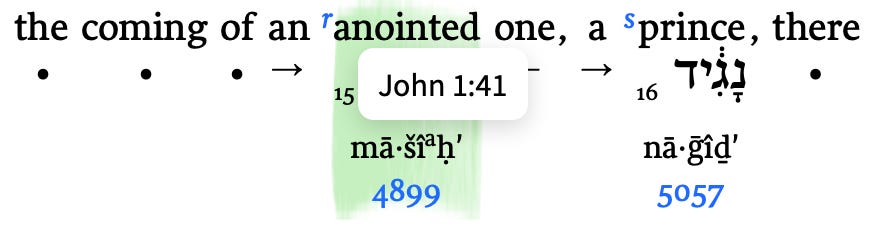
(source: Logos Software, Interlinear view of Daniel 9:25, showing footnote to John 1:41)
John 1:41 refers to Jesus Christ as the Messiah.
41 He first found his own brother Simon and said to him, “We have found the Messiah” (which means Christ).
John 1:416
The second use of the word “anointed one”, is in Daniel 9:26,
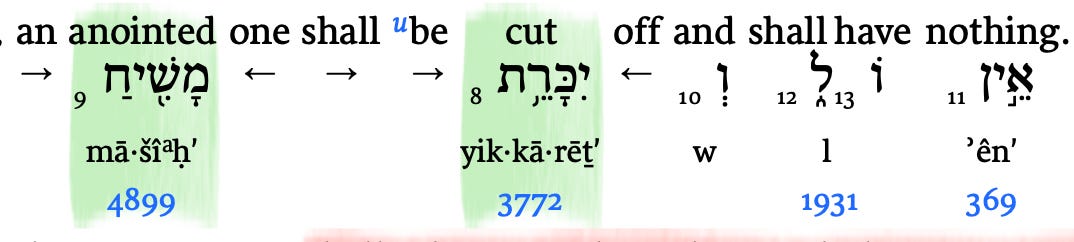
The “anointed one” is מָשִׁיחַ mâshîyach, where Strong’s Concordance 4899 states,
maw-shee´-akh; from 4886; anointed; usually a consecrated person (as a king, priest, or saint); spec. the Messiah:—anointed, Messiah.7
So anointed one can mean a king, a priest, or a saint, but also specifically it can mean the Messiah.
In the New American Standard (NAS), King James Version (KJV), and Biblos Interlinear Bible (INT), Daniel 9:25-26 all use “Messiah” vs. “anointed one”. Biblehub lists these translations,
Daniel 9:25
NAS: until Messiah the Prince
KJV: Jerusalem unto the Messiah the Prince
INT: Jerusalem until Messiah the Prince weeksDaniel 9:26
NAS: weeks the Messiah will be cut off
KJV: weeks shall Messiah be cut off,
INT: and two will be cut the Messiah and have the city
Daniel’s 70 Week Prophecy is most likely referring to the Messiah, Jesus Christ.
What does “cut off” mean?
Assuming “Anointed One” is the Messiah, Jesus Christ, let’s study further. In Daniel 9:26, the Messiah shall be “cut off”. In Strong’s Concordance 3772, cut off or karath denotes to cut, cut off, cut down, make a covenant.8 The Lexham Theological Wordbook elaborates upon this idiom, or figurative phrase,
כָרַת (kārat). vb. to cut. Used in the idiom “to cut a covenant” to refer to making a covenant.9
The idiom, “cut off”, is correlated to a covenant agreement. In Genesis 15:7-11, God made a covenant with Abraham by asking him to bring him animals to be cut in half, which became known as a “cutting ceremony”. In Jeremiah 34:18, there is also the “cutting ceremony” which is used in relation to a covenant or promise.
The idiom “to cut (kārat) a covenant (bĕrît; e.g., Jer 34:18)” and Genesis 15 provide details of an ancient Hebrew tradition where each party would then pass between the pieces of an animal cut in half. If the commitments of the covenant (bĕrît, Jer 34:17–20) are broken, the person supposedly suffers the fate of the cut animal. In Genesis 15, a boiling pot or flaming torch symbolizing God’s power, or a celestial sign (possibly a comet). His power passes through the pieces, thereby taking all the curses of the covenant upon Himself.10
The sacrifice of the Passover Lamb is a type of “cutting ceremony” and “blood covenant”. Jesus Christ, the Messiah, is “cut off”, and passes through the cut pieces, taking all the curses or “sins” of the covenant upon Himself. Jesus Christ is the blood covenant.
Blood Covenant and Red Letters
Let’s review some of the actual words of Jesus Christ during Passion Week. Before Good Friday, Jesus gathers with His disciples to have the Last Supper. Here are His words,
Drink of it, all of you, 28 for this is my blood of the covenant, which is poured out for many for the forgiveness of sins.”
Matthew 26:27–2811
Below is the Shroud of Turin, believed to be a negative image of the crucified body of Jesus Christ who was broken for our sins.
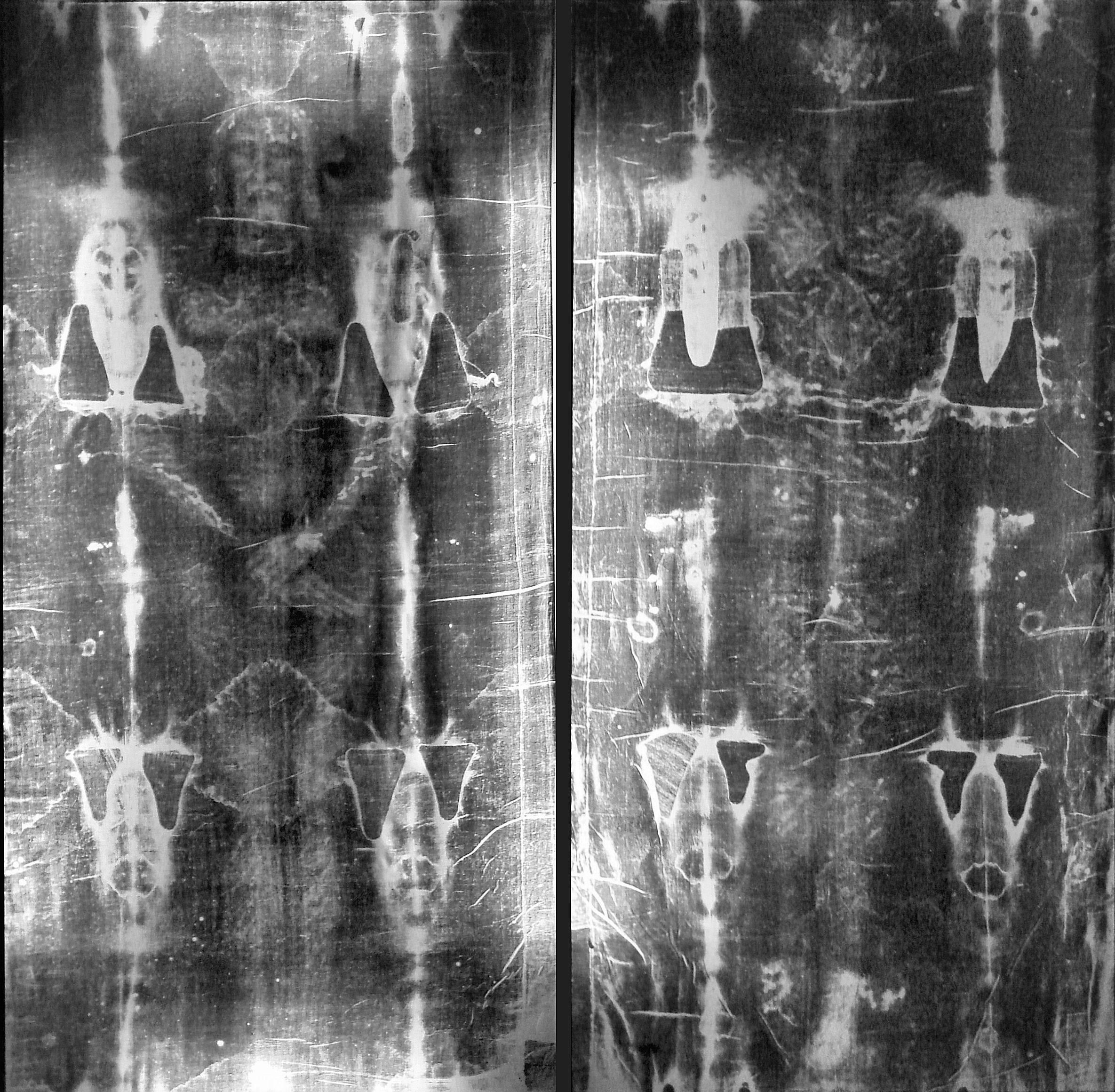
(source: Full length negatives of the shroud of Turin, public domain)12
On the first Good Friday, April 3rd, 33 AD, after 3:00 p.m., Jesus made seven statements.
Jesus’ first three remarks were made between 9:00 a.m. and noon (Mark 15:25).
First, He asked forgiveness for those who crucified Him (Luke 23:34). On the cross Jesus made forgiveness possible not only for those involved in His crucifixion, but also for all who would put their trust in Him.
Second, Jesus promised the penitent thief he would meet the Lord in paradise that very day (Luke 23:43), giving us insight into what happens following believers’ deaths.
Third, Jesus made provision for the care of His mother by John (John 19:26–27).13
Jesus’ last four statements were spoken between noon and 3:00 p.m., the final hours before His death (Matt. 27:45; Mark 15:33; Luke 23:44). His fourth statement was a cry of isolation, quoting Ps. 22:1 in Aramaic (Matt. 27:46; Mark 15:34). This statement arose not so much from His own physical pain, but the anguish of solitarily taking upon Himself the sin of the world.
His physical agony is expressed in the fifth statement, when Jesus acknowledged His thirst (John 19:28).
After being given a sour drink, Jesus made His sixth statement, “It is finished” (John 19:30), a cry of victory, not defeat. Jesus was not finished, but redemption was complete.
In His final words Jesus quoted Ps. 31:5 as He committed His spirit to God (Luke 23:46).14
“It is finished” was a statement of victory, not defeat. The mission of Jesus in “the cutting off covenant” was complete.
Jesus came to labor and suffer, and to be the Ruling Judge, as reflected in another sign in Gemini with two lampstands, two olive trees, two stars above Castor and Pollux.
April 3rd, 33 AD Sign of Spiritual Warfare
In The Signs of Immanuel, Section 13.9 Christ the King,
The night of the Crucifixion and the following night reveal the story of Jesus Christ, the King, in the Mazzaroth.
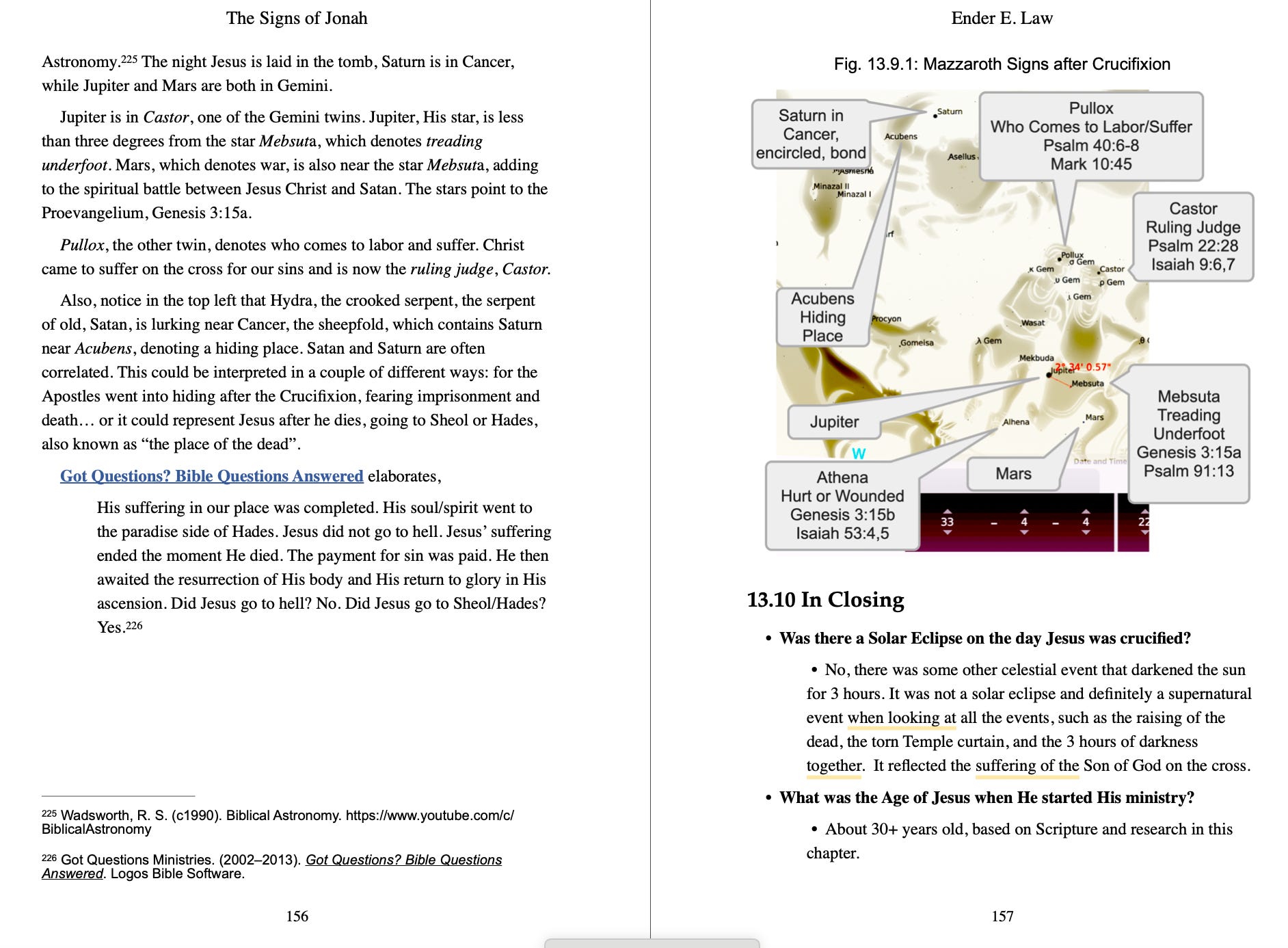
When Jupiter, Saturn, and Mars are relatively close together, it is a sign of spiritual warfare, noted by Robert Scott Wadsworth, teacher of Biblical Astronomy. The night Jesus is laid in the tomb, Saturn is in Cancer, while Jupiter and Mars are both in Gemini.
Jupiter is in Castor, one of the Gemini twins. Jupiter, His star, is less than three degrees from the star Mebsuta, which denotes treading underfoot. Mars, which denotes war, is also near the star Mebsuta, adding to the spiritual battle between Jesus Christ and Satan. The stars point to the Proevangelium, Genesis 3:15a.15
Below is a preview for pages 156-157 from The Signs of Immanuel, which shows the Mazzaroth Signs during the Crucifixion and the Spiritual Warfare alignment of Saturn, Jupiter, and Mars in Cancer and Gemini.
(source: The Signs of Immanuel)16
In Closing
Who is the “Anointed One”?
Jesus Christ the Messiah
What does the “Anointed One cut off” mean?
“cutting off” is an idiom for covenant.
Jesus Christ is the blood covenant
What signs were in the Heavens?
March 5th, 444 BC - a sign in Taurus, denoting His Glorious Coming and Spiritual Warfare. Most likely alluding to Nehemiah and his Spiritual War to rebuild Jerusalem.
April 3rd, 33 AD - a sign in Gemini, denoting His Rule on Earth,17 and His laboring and suffering culminating to the Crucifixion of Jesus Christ where His sixth statement, “It is finished” (John 19:30), is a cry of victory, not defeat. Jesus became the blood covenant and won the Spiritual Battle against Satan by being the sacrificial Lamb of God on Passover for the sins of the world.
I pray that all of you have a blessed Good Friday and Easter Service.
Thank You Jesus.

“These books are fascinating! If you want to go deeper to understand the Bible, these books are a must...” Reviewer on Amazon
Paperback and Kindle on Amazon, and some of the books are on Barnes and Noble.
I’ve also started to use “Buy me a coffee” for eBooks and more digital downloads. I may be able to offer paperback books in the future.
I’m currently offering special discounts:
50% Discount Code: EASTER26 - limited time offer or
Free downloads with Basic Level Membership, which will include more small group tools posted over time. For example, I’m working on organizing small group slides (Keynote, PowerPoint, or PDF) to be shared through “Buy me a coffee” to complement the books and this Substack.
“Did these books help you in some way? If so, I would love to hear your story. Honest reviews are one of the most powerful ways to help other readers discover the material they need. If you have a moment, please consider sharing your thoughts on Amazon, Goodreads, or leave a comment. Thank you.”
https://www.foundationsforfreedom.net/References/OT/Historical/Nehemiah/Nehemiah00HistorIntro.html
https://commons.wikimedia.org/wiki/File:108.Nehemiah_Views_the_Ruins_of_Jerusalem%27s_Walls.jpg
https://mazzarothgospel.blogspot.com/
Ferguson, S. B. (1994). Daniel. In D. A. Carson, R. T. France, J. A. Motyer, & G. J. Wenham (Eds.), New Bible commentary: 21st century edition (4th ed., p. 759). Inter-Varsity Press.
Ferguson, S. B. (1994). Daniel. In D. A. Carson, R. T. France, J. A. Motyer, & G. J. Wenham (Eds.), New Bible commentary: 21st century edition (4th ed., pp. 759–760). Inter-Varsity Press.
The Holy Bible: English Standard Version (Jn 1:41). (2025). Crossway Bibles.
Strong, J. (2009). In A Concise Dictionary of the Words in the Greek Testament and The Hebrew Bible (Vol. 2, p. 74). Logos Bible Software.
https://biblehub.com/hebrew/3772.htm
Jones, M. R. (2014). Covenant. In D. Mangum, D. R. Brown, R. Klippenstein, & R. Hurst (Eds.), Lexham Theological Wordbook. Lexham Press.
Jones, M. R. (2014). Covenant. In D. Mangum, D. R. Brown, R. Klippenstein, & R. Hurst (Eds.), Lexham Theological Wordbook. Lexham Press.
The Holy Bible: English Standard Version (Mt 26:27–29). (2025). Crossway Bibles.
https://commons.wikimedia.org/wiki/File:Full_length_negatives_of_the_shroud_of_Turin.jpg
Lemke, S. W. (2003). Seven Words from the Cross. In C. Brand, C. Draper, A. England, S. Bond, E. R. Clendenen, & T. C. Butler (Eds.), Holman Illustrated Bible Dictionary (pp. 1467–1469). Holman Bible Publishers.
Lemke, S. W. (2003). Seven Words from the Cross. In C. Brand, C. Draper, A. England, S. Bond, E. R. Clendenen, & T. C. Butler (Eds.), Holman Illustrated Bible Dictionary (p. 1469). Holman Bible Publishers.
Law, E. E. (2026). The Signs of Immanuel. https://www.amazon.com/gp/product/B0GSXNJCZZ?ref_=dbs_m_mng_rwt_calw_tkin_4&storeType=ebooks
Ibid.
https://mazzarothgospel.blogspot.com/
Blessings to you & yours this very Holy Week🙏